
Still Speaking: Between Life, Dread, and Resistance | Noor Abo Ras and Moran Barir
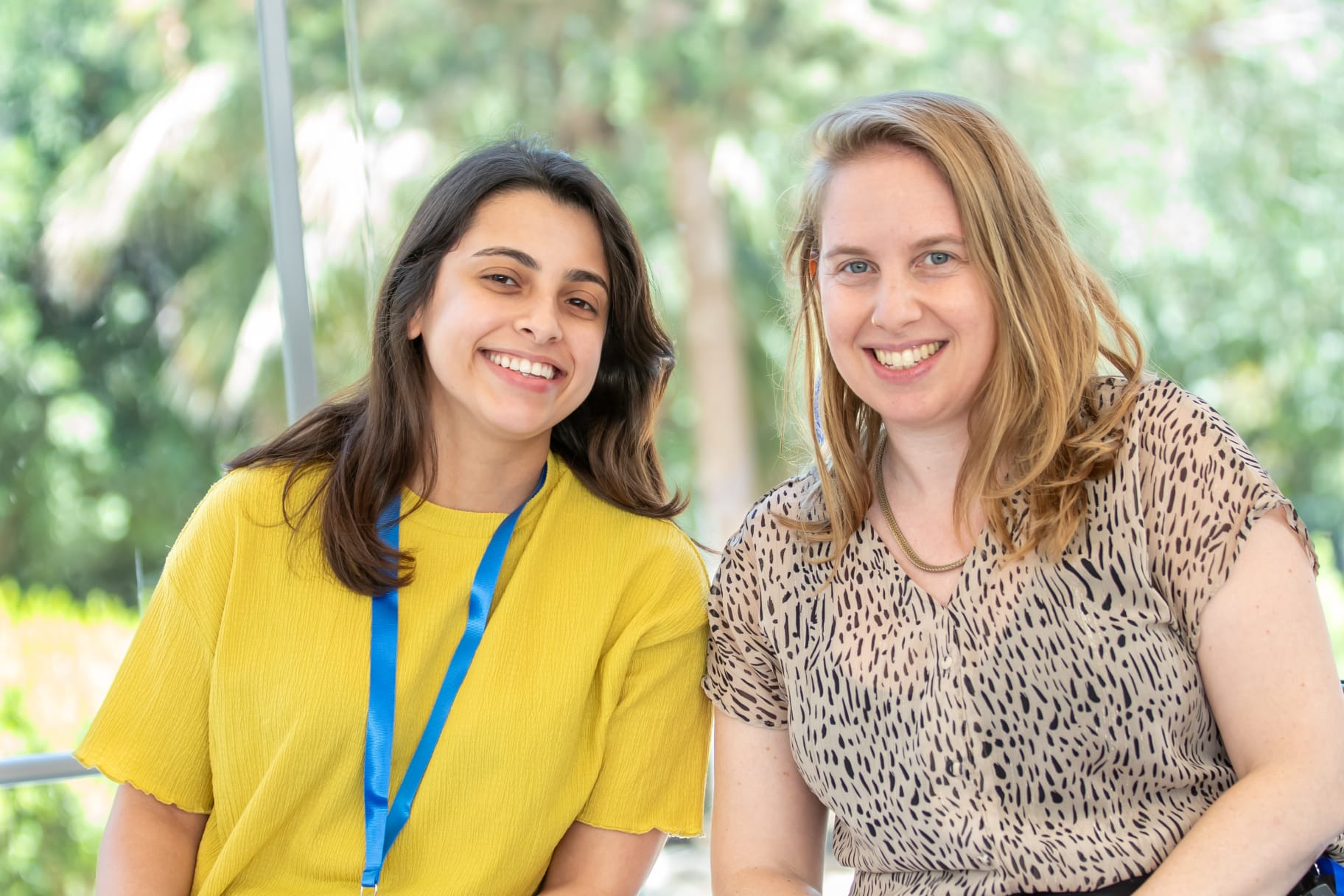
Still Speaking: Between Life, Dread, and Resistance
A correspondence between Noor Abo Ras and Moran Barir
Moran:
Politically, I think a lot about how this war – this deadly, horrific, unnecessary, cynical, repulsive war – is yet another distraction. A distraction that enables the continued theft of land and the killing of people in the West Bank. The continued abandonment of the Palestinian population inside ’48 to criminal organizations. The ongoing genocide of the people of Gaza – whether through bombings that still have not ceased, or through leaving them to their fate. The continued mobilization of Israeli society for war – whether through actual conscription into the army and reserves, or through recruitment into a troubling support for an endless war. The continued evasion by the Prime Minister of trial – both domestic on charges of corruption, and international on charges of war crimes.
On a personal level, I feel sad, hurting, and furious. But I was supposed to be happy. A year and two months ago, I gave birth to a sweet baby who turned my world upside down. A sequence of events led us to leave the country and, for now, decide to stay outside it. I don’t know if we have left for good – time will tell. But the thought of raising a child in a war zone, within a fascist and intoxicated society, is extremely difficult. For most of my adult life, I was part of a community of Jewish Israelis resisting from within, and until recently I had never really considered leaving. But I was also never opposed to the idea of resisting from the outside. And above all, right now, I feel that the struggle I have been part of for about a decade and a half is too much for me as a new mother.
So I was supposed to be happy – because this is exactly what I wanted to escape, from being with a baby under rockets and sirens, within a society where violence is so normalized in everyday life.
But I don’t feel happy at all. Not even relief.In the moments when I can’t push away what’s happening, I feel sick to my stomach. My people are bombing and being bombed. My country is causing more and more destruction and killing in every possible arena. How can one feel joy in the face of that? And where does one find the strength to keep resisting it?
Noor:
This division you chose between the personal and the political is interesting. I feel that lately, there is no longer any space left for the personal. My very existence in this space as a Palestinian is already political. My personal existence has always been political, but in recent years it has become impossible to repress this.
Palestinian society as a whole is bleeding. In Gaza, they are still searching for the bodies of their loved ones, under bombardment that does not stop. In the West Bank, ethnic cleansing and unimaginable violence. And within ’48, crime is raging alongside clear and deliberate abandonment.
There was the beginning of a struggle against crime – something that, for a moment, restored in me a sense of hope, a sense of agency. And then this war came, erasing everything – pulling me back into that sense of persecution and silencing since October 7. Suddenly, it is impossible to resist; one must fall in line with the government. Again arrests, again displays of force – dozens of soldiers coming to arrest one person over a facebook post. Ministers making it clear that one must “keep their head down.”
I live with a constant sense of threat and humiliation. How can anyone accept a life like this? How did we end up here? And is it moral to bring children into this reality?
I have always been rebellious, but in recent years I feel as though I have been given something that suppresses me – regulates me, weakens me, silences me. I feel that I have lost my connection to anger, to action, that my space has shrunk. I try to write, to go out to demonstrations when possible, to offer financial help where I can – but the feeling is that the situation is only getting worse.
And then the question remains: what else can be done?
Moran:
I think this movement of raising one’s head, then receiving a “blow” from the regime, and falling back again into pain, paralysis, and silence – this is precisely the goal of this war. And of all the wars and “operations” that the Israeli regime has conducted and promoted here throughout our lives. It is no coincidence that dozens of soldiers come to arrest a single person – there is a clear aim here: to frighten, deter, paralyze, and uproot every voice of protest before it is even born, so that they can continue their actions undisturbed.
This works on Israeli-Jews as well, it works even better. Israeli Jews don’t just freeze; they rally behind the regime with enthusiasm, again and again – blindly, with a kind of willful amnesia. Sometimes it seems that every social or political protest in Israel ends with the bombing of Gaza, painful as It sounds. I still remember how we looked with cautious optimism, with joy mixed with suspicion, at the wave of refusal – even if small – that emerged in the summer of 2023 following the protest against the judicial overhaul. Some of us hoped there was real potential here for change, for a real rupture between the people and the government, that the public was beginning to set a boundary. I was not surprised, but absolutely horrified, to see how quickly those very same people – who had signed letters refusing to serve a corrupt government – enthusiastically enlisted to bomb Gaza again, to kill tens of thousands of civilians and destroy entire neighborhoods on an unprecedented scale.
This is the people I am a part of. And it is heartbreaking.
Regarding the question you raised, Noor – whether it is moral to bring children into such a reality. I struggled for a long time with whether I wanted to bring a child into the world. My ambivalence stemmed precisely from this point – I felt it was neither moral nor responsible to bring a soul into this world, a world with such levels of cruelty, violence, and darkness. After a long period of deliberation, I reached the conclusion that as it is indeed not a moral thing to do, my desire also has an important place. I granted legitimacy to my desire within this world, and that is the difference for me.
The desire to create a better world, alongside a sense of responsibility for the crimes committed in my name, has always guided my activism. I truly believe that no one is free until everyone is free. There are many injustices to repair, and there is a great vision that must urgently be imagined in detail in order to create a better future. And that is a great deal of work. But right now, a small child is the center of my world, and I did not imagine that it would be so, nor how much it would shift the course of my life.
I became pregnant for the first time a few days before October 7. Not surprisingly, that pregnancy did not survive the shock and horror of those early weeks. Nor did the one that followed. But the third time was the charm – a third pregnancy that succeeded, that was healthy, and that ended with a child. From the moment of the first siren at six-thirty AM on October 7, I wrapped myself in a bubble – hard on the outside and soft on the inside – and that is how I made it through all the upheavals of the past two and a half years. This bubble protected me when I lost pregnancies, and when I went through pregnancy and birth, and through the great transformation of becoming a parent. For the journey of pregnancy, I needed to turn inward; and for the journey of motherhood, it seems I needed to move somewhat geographically away. There is a profound, daily dissonance between the immense pain of the war and the growing joy of my newly-expanded family. Right now, I do not know where the balance lies between the struggle for a better life for all, and living my own private life.
Noor:
We are writing this document during a holiday period. On the morning of Eid al-Fitr, I woke up to the sound of sirens and explosions – missiles overhead – and yet we continue to maintain a “routine.” We dress for the holiday, prepare food, set a table with cakes, put on a smile that is forced into place.
Is this the strength of human beings? The ability to move on, to normalize, to insist on routine? Or is it repression?
Missiles above our heads. An army that continues to destroy and devastate in every arena. Al-Aqsa Mosque is closed for the first time since ’67, and worshippers shot at as they came for holiday prayers.
And me? Sometimes I cooperate with the disconnection and repression, and sometimes I observe everything from the outside. There is an internal struggle within me – perhaps it is better simply to disconnect, to let go, to cling to the here and now. To hear an explosion overhead, pause for a moment… and then continue talking about the good Ma’amoul cookies.
It is fascinating to observe how human beings survive in times of extremity. It is far less fascinating when you are part of such a time.
I notice how a “normal” conversation unfolds: fruit, cakes, laughter, plans – who we will visit and who will be visited. And then there is always that moment when one person chooses to bring in the voice of reality, to speak about the political situation. As if we have pre-assigned among ourselves people whose role is to remind us.
At breakfast, I sit next to my parents. There is plenty of food but not much of an appetite. We exchange blessings and kisses. My mother says she didn’t sleep at all – maybe because of the coffee. My father says he slept a little, but he is worried – and that we might laugh, but he thinks we should stock up on canned goods for an entire year.
I look at him and ask: maybe it’s time to emigrate?
And then – again – a return to repression. Plans for what we will prepare on the second and third days of the holiday, what we will do today, jokes and laughter.
This is how human beings function in times like these – constantly sliding between reality and disconnection from it.
They always say this is a “psychotic drift.”
But perhaps the truth is the opposite:
We are already inside the psychosis,
and sometimes we are granted only brief moments of drifting into reality.
__
Noor Abo Ras, a psychology intern and former staff member at the School for Peace, a graduate of the Universities Dialogue Course and Conflict Group Facilitation
Moran Barir, Media Coordinator at the School for Peace, a graduate of the Conflict Group Facilitation Course
__