
Palestinian–Jewish Dialogue Facilitators’ Training 2025 Summary
The Program in Numbers
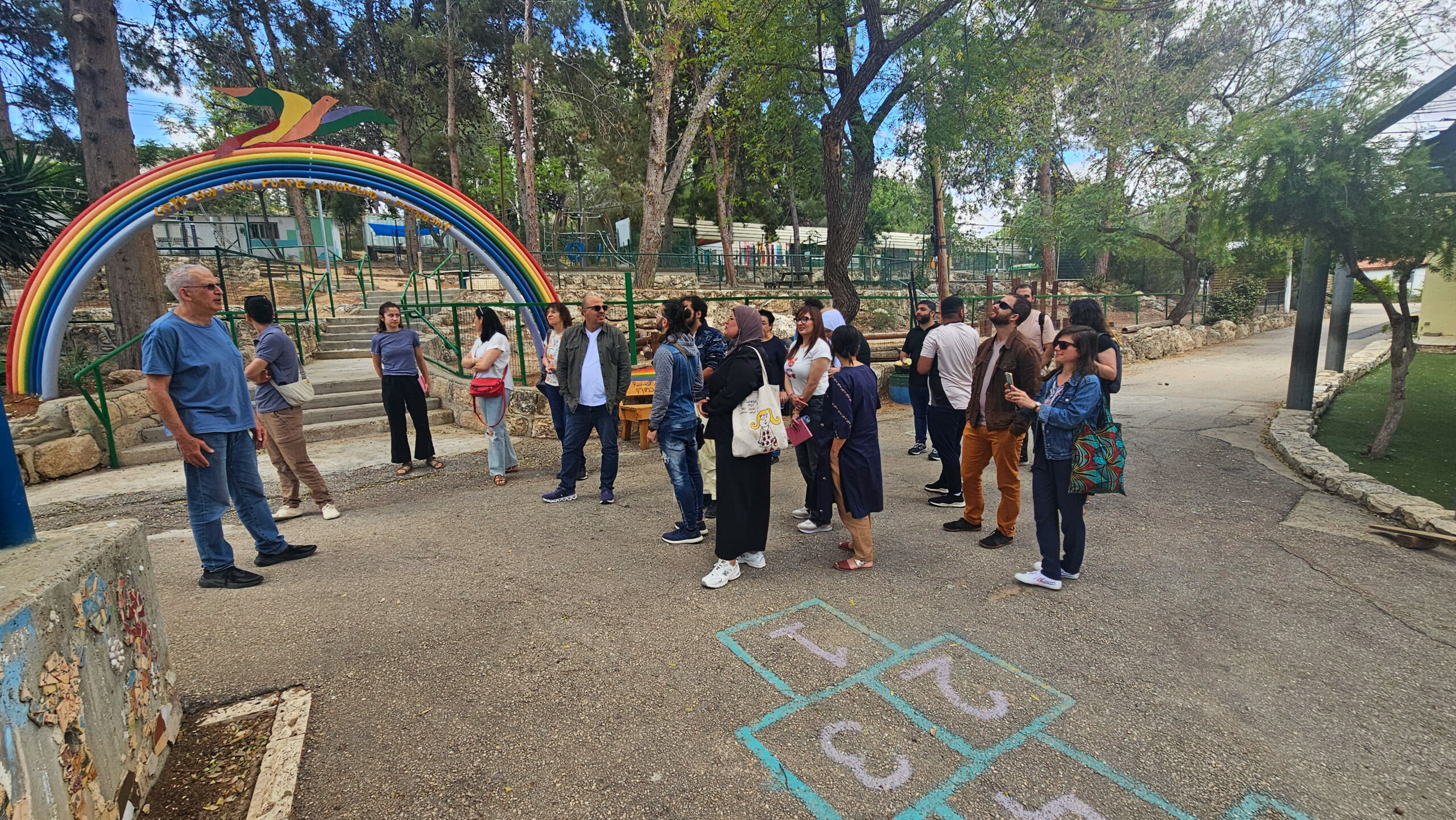
Between April and July 2025, the School for Peace held its intensive training program for Palestinian–Jewish dialogue facilitators. Twenty-four participants successfully completed the course: 12 Palestinians and 12 Jews, including 13 women and 11 men. They came from fields such as therapy, education, counseling, and community work, and from across the Negev, the Center, the North, and East Jerusalem.
The program consisted of 11 sessions, each lasting 6 hours, including two intensive weekends — one of two days, and one of three — adding up to 80 learning hours.
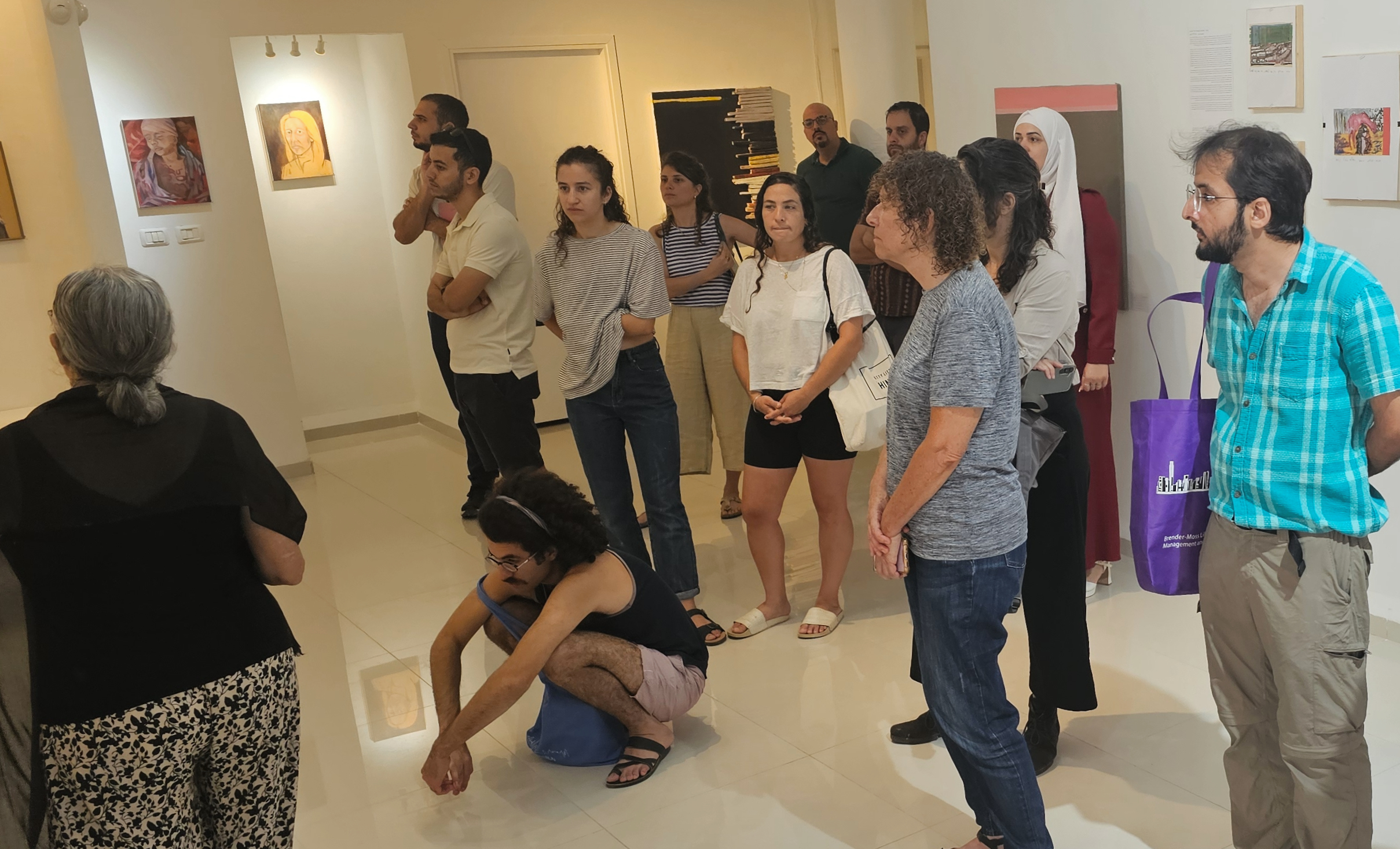
As part of the course, participants visited the Moa’ka – Pain exhibition at the Neve Shalom/Wahat al-Salam gallery, curated by director Diana Shlovi Zreik. The exhibition featured works by Palestinian and Israeli artists exploring political issues — especially genocide, loss, and the pain of the war on Gaza. This visit sparked deep questions about community work in wartime, civic initiatives, identity, and presence in the public sphere.
“During the course, I found myself facing questions I had never dared to ask before — about my identity, my place in a complex reality, and even about the silence I had grown used to.”
This course is a cornerstone of the School for Peace’s vision: developing political and social leadership capable of leading real change between Palestinians and Jews. It is based on the School’s unique methodology, which blends deep dialogue with power analysis, critical examination of narratives, and an understanding of the historical and social contexts of the conflict.
The goal is not only to equip participants with facilitation tools, but to immerse them in the lived complexity of dialogue so they can navigate it with professional and political responsibility. Graduates join a vibrant network of facilitators working in civil society, education, community work, and academia — continuing to use dialogue as a tool for transforming reality and building a just and equal partnership.
Three Core Learning Strands
- Palestinian–Jewish Dialogue — both mono-national and bi-national. Initially led by course facilitators, later by participants themselves in “peer facilitation.”
- Theoretical Learning — skill-building through lectures by the School’s team and guest speakers.
- Issue-Based Learning — professional discussions on challenges emerging directly from dialogue work.
Course Facilitators
- Ibrahim Ighbariyyeh — Partner Facilitator, School for Peace; social worker with over 20 years’ experience in therapy, counseling, and group facilitation, especially in mixed cities and academic dialogue programs.
- Michal Zak — Partner Facilitator, School for Peace; veteran facilitator in Palestinian–Israeli joint organizations, specializing in political education and conflict group facilitation.
Dialogue in Wartime
The course began in the midst of a wave of incitement, silencing, and escalating violence against Palestinians — not only the bombardment of Gaza, but also systematic suppression of Palestinian voices, withdrawal from public activism, and growing fear of speaking out. The war was not a “background” to the course — it was present in the room, in the learning, and in every conversation.
From the start, it was clear: this was not a course happening despite the situation, but because of it. The challenge — and the choice — was to insist on political partnership while the ground beneath us was crumbling. Participants learned that real dialogue is not about “getting past” pain, but about staying with it.
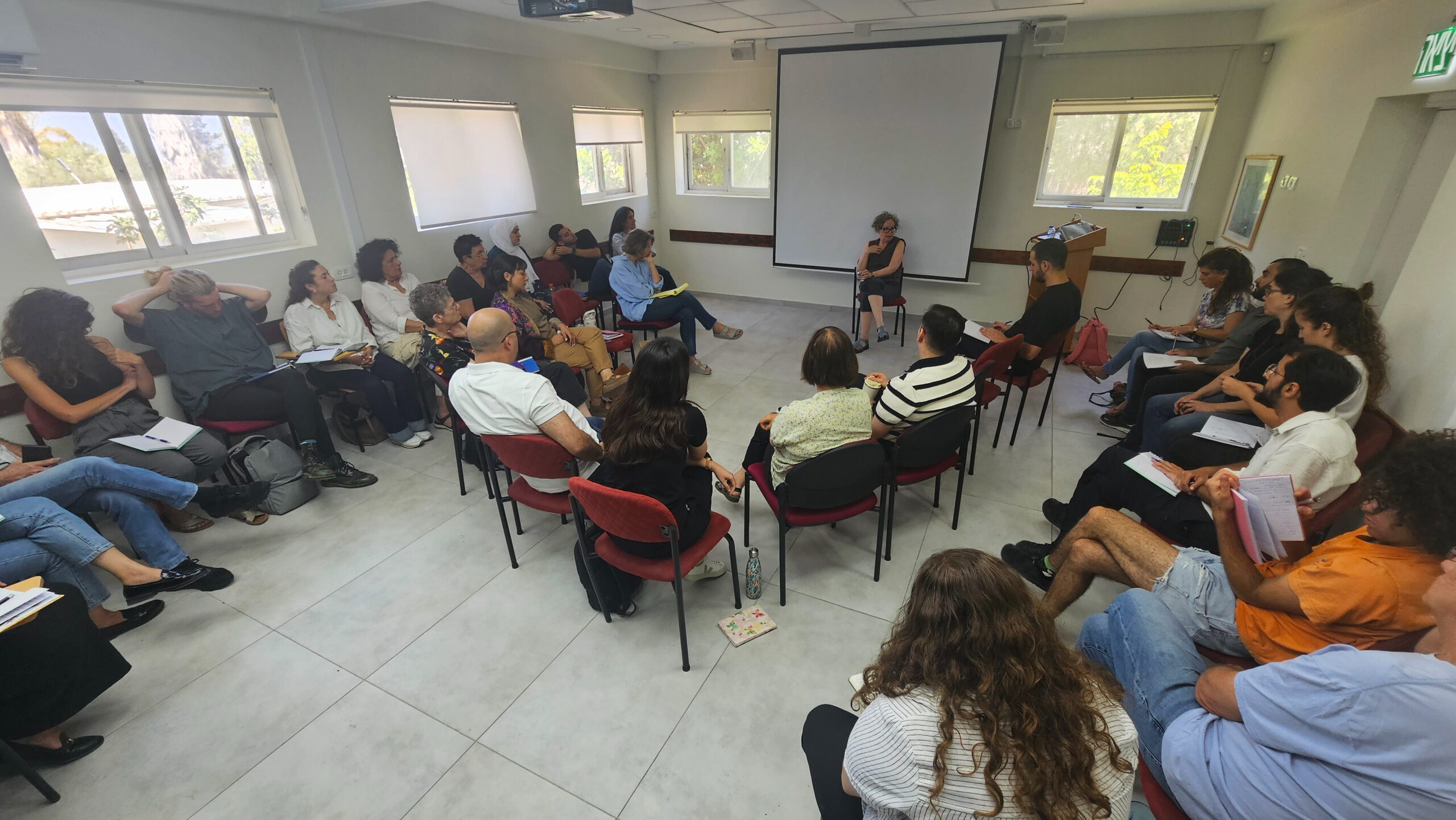
Sessions combined facilitation skills — power analysis, dealing with complexity, shaping a facilitator’s stance — with the courage to ask uncomfortable questions, even of oneself. The conversations were charged, multilingual, and alive with tension that was deliberately left unresolved so it could be learned from.
Language itself became a central arena — not merely a matter of translation, but a political battleground. Questions of partial translation, unequal access, and the weight of words became core educational and political themes.
While some core issues — like occupation and the Nakba — were sidestepped, perhaps out of fear they would tear the group apart amid the horrors of war, the space also allowed for rare closeness. The Jewish group could face the reality of crimes committed in their name; the Palestinian group could share pain, guilt, and paralysis in the face of the war. Together they created a bi-national space that stood in stark contrast to the prevailing relationships outside.
“I chose to join the course because I believe in the necessity of speaking, especially in dark and frightening times.”
Peer Facilitation: Learning by Doing
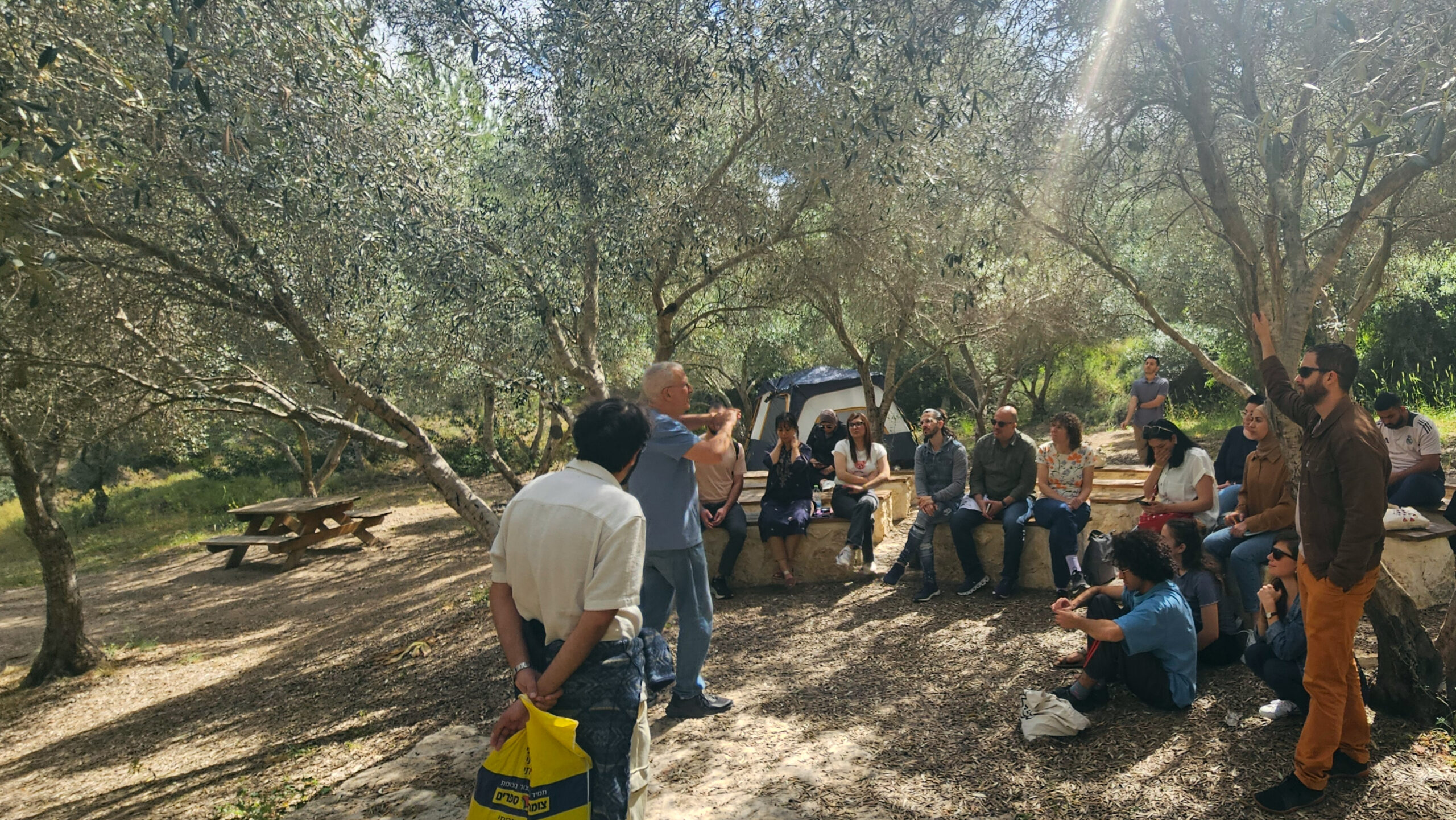
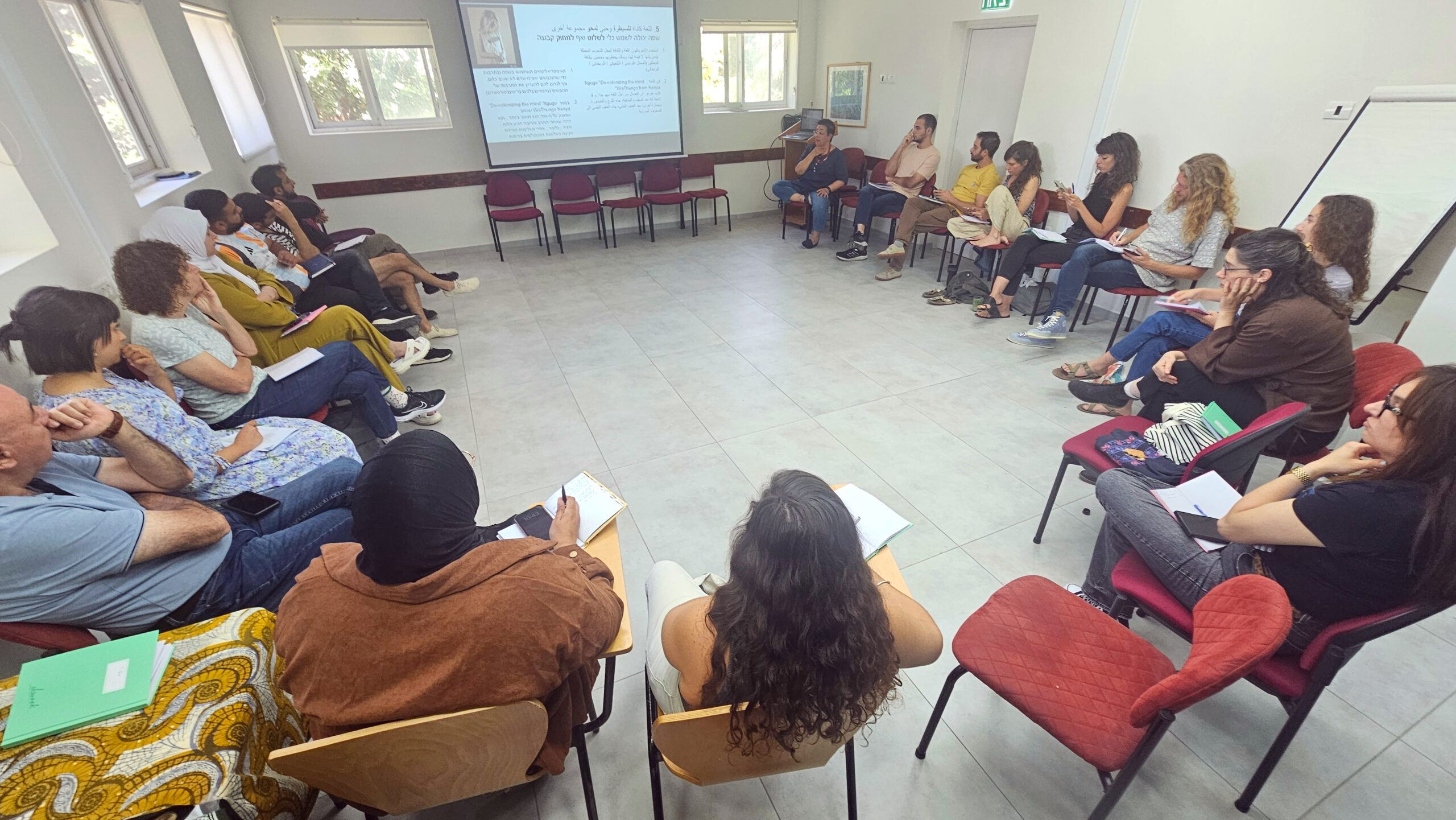
A key part of the program was hands-on facilitation practice. The large group was split into two, and pairs of participants led parts of the process — whether pre-planned or in real-time response to emerging dynamics.
After each session, the group engaged in deep analysis: examining group processes, personal feedback, the role of language, noticing avoidance patterns, facilitator authority, timing of interventions, co-facilitation strategies, and division of roles. The emphasis was on integrating political awareness with educational skill, and on holding complex emotions without rushing to resolve them.
“Facilitating the mixed group with my peer was a deeply meaningful experience — I felt closeness and empathy that crossed identities.”
Lectures
Throughout the course, lectures deepened participants’ professional and theoretical understanding:
- Ibrahim Ighbariyyeh — Core concepts in group facilitation
- Michal Zak — The role of language in identity and dialogue groups
- Dr. Roi Zilberberg — The School for Peace dialogue method
- Noor Abu Ras — Dialogue in wartime
- Dr. Amalia Sa’ar — Critical perspectives on dialogue discourse and embedded power
- Khawla al-Turi — Language, gender, identity, and narrative: dialogue as both silencing and opportunity
- Ruthie Shuster — Ethics of political facilitation
- Dr. Maram Masarwa — Paulo Freire and critical pedagogy as foundations for political and liberatory education
Conclusion
The course was transformative for many, providing unique professional grounding in Palestinian–Jewish dialogue facilitation. Yet it also reflected the limits of dialogue in catastrophic times. Some planned activities were postponed, including a Nakba-focused tour; several sessions shifted to Zoom; and in some mono-national meetings and peer-facilitation sessions, sensitive topics — like the army, religious identity, or privilege — were met with silence. These moments exposed the very dynamics the course seeks to change: fear of confrontation and retreat into a “containment” that masks deep divisions.
Even so, trust and partnership grew. Spaces emerged where hard truths could be spoken, listening could be different, and deep closeness could occur. The final session, centered on Paulo Freire’s ideas, tied the course back to the School’s educational philosophy — one that embraces conflict, critique, and hope as essential to political dialogue.
The relationships built were not based on agreement, but on the ability to live with difference. Facilitation became a tool for political and professional responsibility. The unanswered questions — about partnership, about the limits of speech, about language itself — may be the course’s most important legacy.
“I have begun to understand — and believe in — the importance of dialogue in facing the many challenges Palestinians and Jews share.”
–