
Palestinian-Jewish Dialogue at Universities: A Year of Different Encounters
Palestinian-Jewish Dialogue at Universities: A Year of Different Encounters
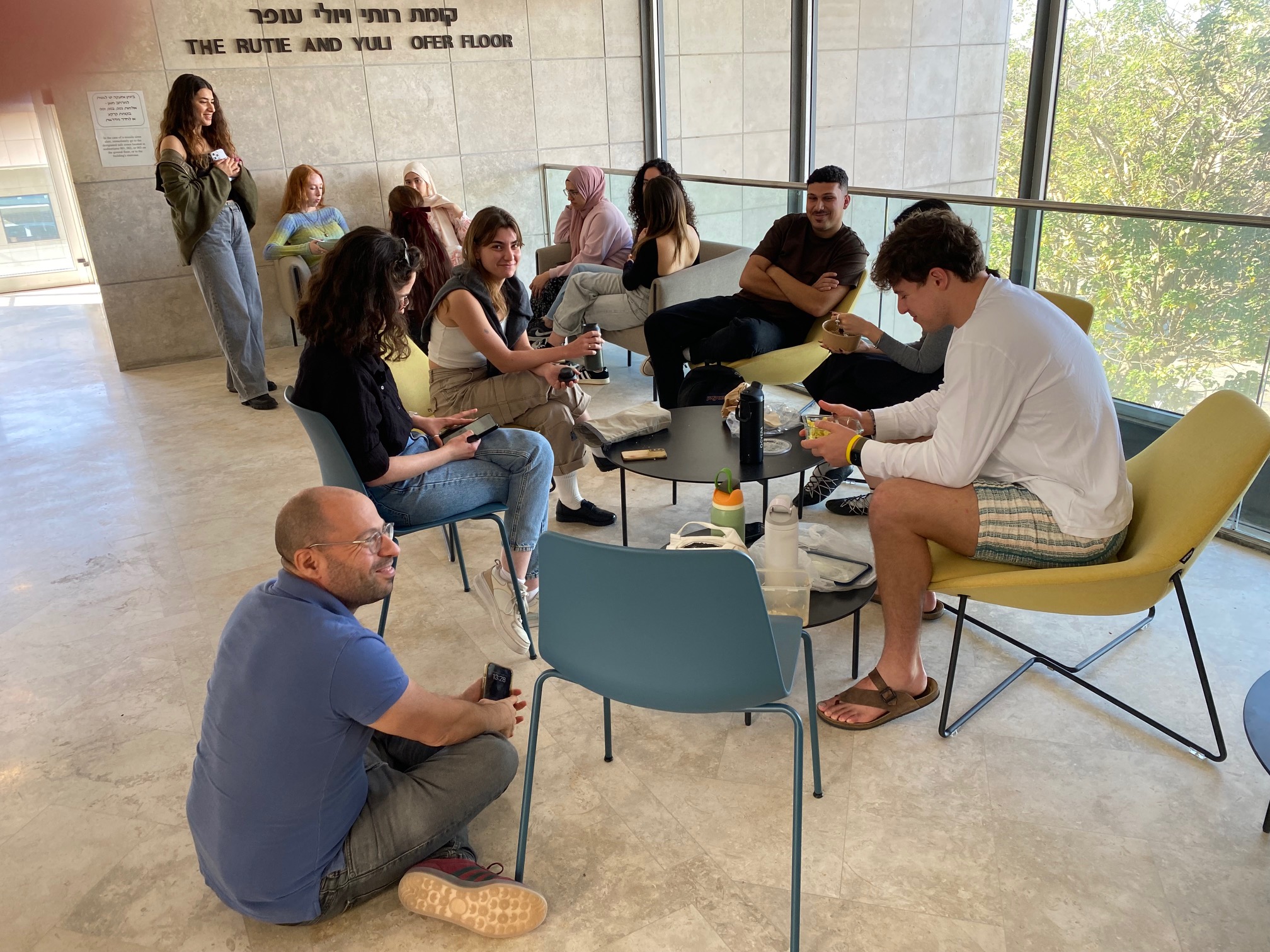
During the 2025-2026 academic year, the School for Peace continued its university dialogue programme through two binational courses held in collaboration with the Departments of Psychology at Tel Aviv University and Be’er Sheva University.
The courses brought together Jewish and Palestinian students for a sustained process of dialogue, facilitated by a Jewish and a Palestinian facilitator from the School for Peace. Both courses were integrated into the academic curriculum and awarded academic credit. Conducted in Hebrew and Arabic, they offered students an opportunity to explore their identities, encounter perspectives different from their own, and engage with the political reality shaping their lives.
The courses took place against a particularly difficult backdrop. Since October 2023, Palestinian students and faculty members in Israeli academic institutions have faced increasing political pressure, scrutiny, and attempts to silence their expression. Many Palestinian students experience campus as a space in which speaking openly about their views and experiences carries personal and academic risks. This reality inevitably enters the dialogue room, shaping relationships, the willingness to speak, and the time it takes to build trust.
Two groups, two very different processes
At Tel Aviv University, 18 students participated: 11 Jewish and 7 Palestinian, from Psychology, Neuroscience, and Biology. The course included 13 meetings of 90 minutes each, as well as a lecture on the Palestinian Nakba by a historian.
From the very first meeting, the group developed an unusually open and trusting atmosphere. Participants spoke directly about October 7, the war on Gaza, empathy, and the unequal recognition of Jewish and Palestinian suffering. The conversations moved beyond competing narratives and allowed for complexity, listening, and self-reflection. A level of openness and depth that often takes an entire semester to develop emerged remarkably early in this group.
At Be’er Sheva University, 11 students participated: 5 Jewish and 6 Palestinian, mainly from Psychology, Social Work, and Behavioral Sciences. The course included 12 meetings of 90 minutes each, alongside a lecture on identity, racism, and intergroup relations.
Here, the process was more gradual and challenging. While the first meetings were characterized by curiosity and a pleasant atmosphere, tensions and hesitations emerged as the conversation turned to the conflict, discrimination, and inequality. Palestinian students expressed fears about speaking openly in the current campus climate, while some Jewish participants found it difficult to engage with experiences and perspectives that challenged their assumptions. The facilitators adapted the process, including holding separate sessions for Jewish and Palestinian participants and returning to questions of identity, responsibility, and the purpose of dialogue. Toward the end of the course, greater openness and trust began to emerge, allowing participants to speak more honestly about their experiences and disagreements.
The significant difference between the two groups raises important questions. How much do the composition of a group and the personal circumstances of its participants shape the possibilities for dialogue? How do different campus environments and institutional responses to political pressure affect students’ sense of safety? And, perhaps most importantly, how can facilitators address fear and silencing directly, while creating the trust needed for a meaningful encounter?
There is no single answer to these questions. The experience of both courses reminds us that dialogue is not a neutral or automatic process: it is shaped by unequal realities and requires ongoing attention, flexibility, and commitment. It also demonstrates the importance of maintaining spaces in which Jewish and Palestinian students can meet, speak, listen, and remain in conversation, especially when doing so is difficult.
With gratitude
We are grateful to the two faculty members who hosted and supported the courses, and to the Departments of Psychology at Tel Aviv University and Be’er Sheva University for making this ongoing collaboration possible. We also thank our donors, Otto per Mille – La Chiesa Valdese, whose support helped sustain these important spaces for dialogue and learning.
__