
Solidarity with the Strike and Protests of Palestinian Society
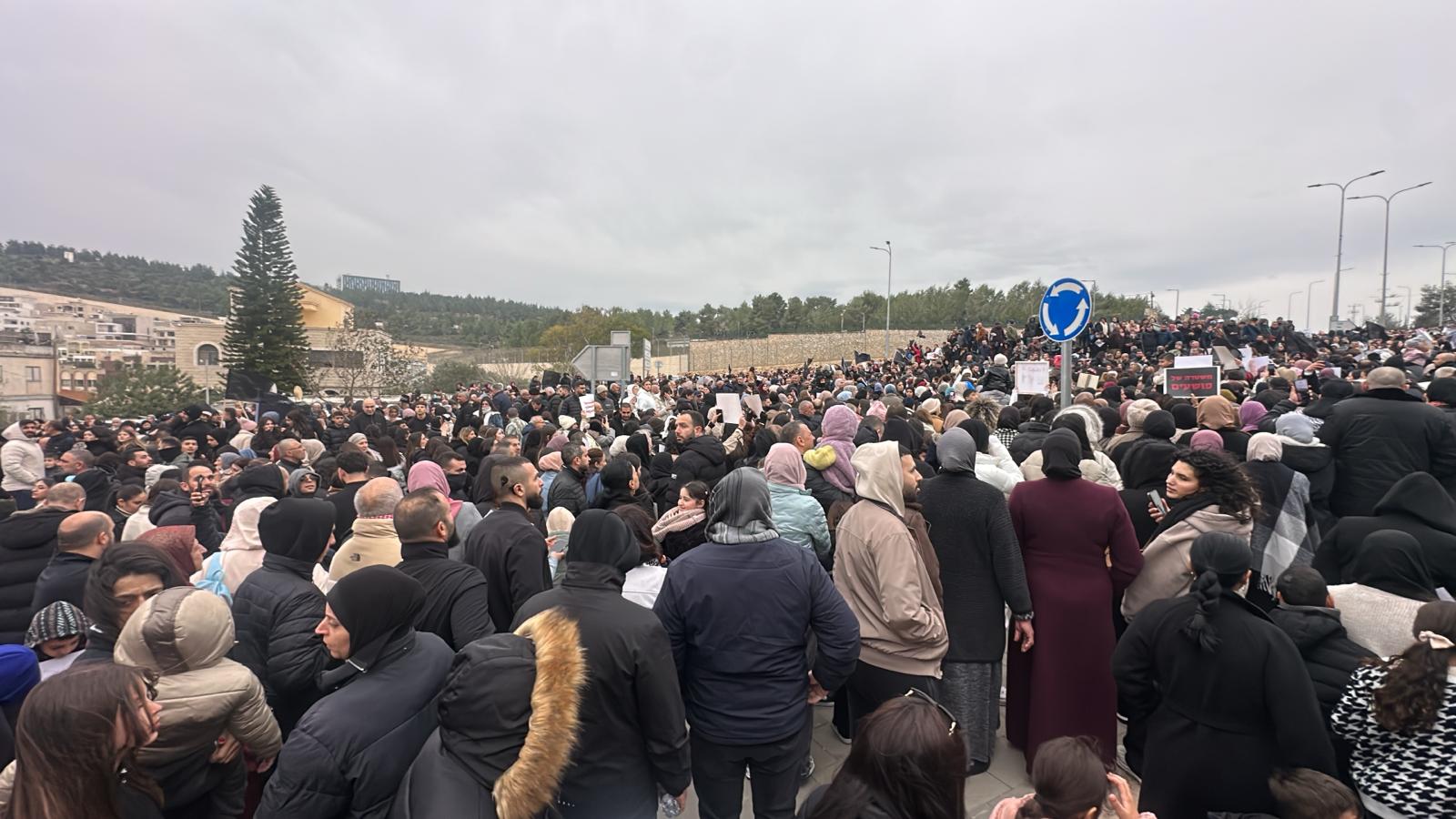
Statement of Solidarity by the School for Peace with the Strike and Protests of Palestinian Society
The School for Peace at Wahat al-Salam-Neve Shalom is following with deep concern the recent events within Arab-Palestinian society, where incidents of violence and organized crime have been intensifying. These developments take place in the context of a persistent lack of effective deterrence and enforcement by the authorities and the Israel Police, whose ongoing and systematic failures in addressing crime have become a clearly observable policy.
The current situation is not merely a localized security failure, but rather deeply reflects the inequality between the majority and the minority in Israeli society, as expressed, among other things, in the fact that the Arab-Palestinian minority is left without protection from ongoing violence and threats.
The policies of the Israeli government are directed toward the systematic oppression of the Palestinian people as a whole, including ethnic cleansing in Gaza, the expansion of settlements and dispossession of Palestinian land in the West Bank, and the erosion of the social fabric of Palestinian society within Israel.
At the School for Peace, we regard the strike and protest actions organized by the Arab-Palestinian public—announced by the High Follow-Up Committee for Arab Citizens—as part of a broader political struggle aimed at advancing justice and equality, and at confronting policies of neglect that undermine fundamental rights and leave Arab-Palestinian society in a state of constant vulnerability.
Ensuring personal security and the protection of citizens is not a matter of choice, but a fundamental obligation of the state and of society as a whole in Israel. We stress that Arab towns and villages must be safe spaces for living in dignity, rather than sites of fear, violence, and exclusion.
We further emphasize that addressing this reality requires far more than temporary security measures. It necessitates comprehensive and long-term strategic plans, including education, economic development, community empowerment, and the meaningful participation of civil society in decision-making processes. Only through such measures can justice and equality become a lived reality rather than repeatedly invoked slogans.
At the School for Peace, we remain committed to our educational-political work toward building a more humane and egalitarian society – one in which the rights of the Palestinian minority are safeguarded, and relations between Jews and Palestinians are based on equality, justice, and mutual respect, free from all forms of systematic exclusion and violence.
We call upon the Israeli authorities to take immediate, decisive, and effective action to protect Arab citizens, to bring an end to the cycle of violence, and to ensure a secure future for coming generations. We also express our full solidarity with the Arab-Palestinian public in its just struggle for a life of dignity and security. As articulated by Awdeh Ghanayem Hussein, a community activist in the struggle in Sakhnin and a participant in the School for Peace’s Change Agents course for mental health professionals:
“This is a broad civic and social struggle by a community that refuses to remain silent in the face of violence and seeks to reclaim the fundamental right to live in safety and dignity.”
__