
Second session of the 2019-2020 Environmental Justice course
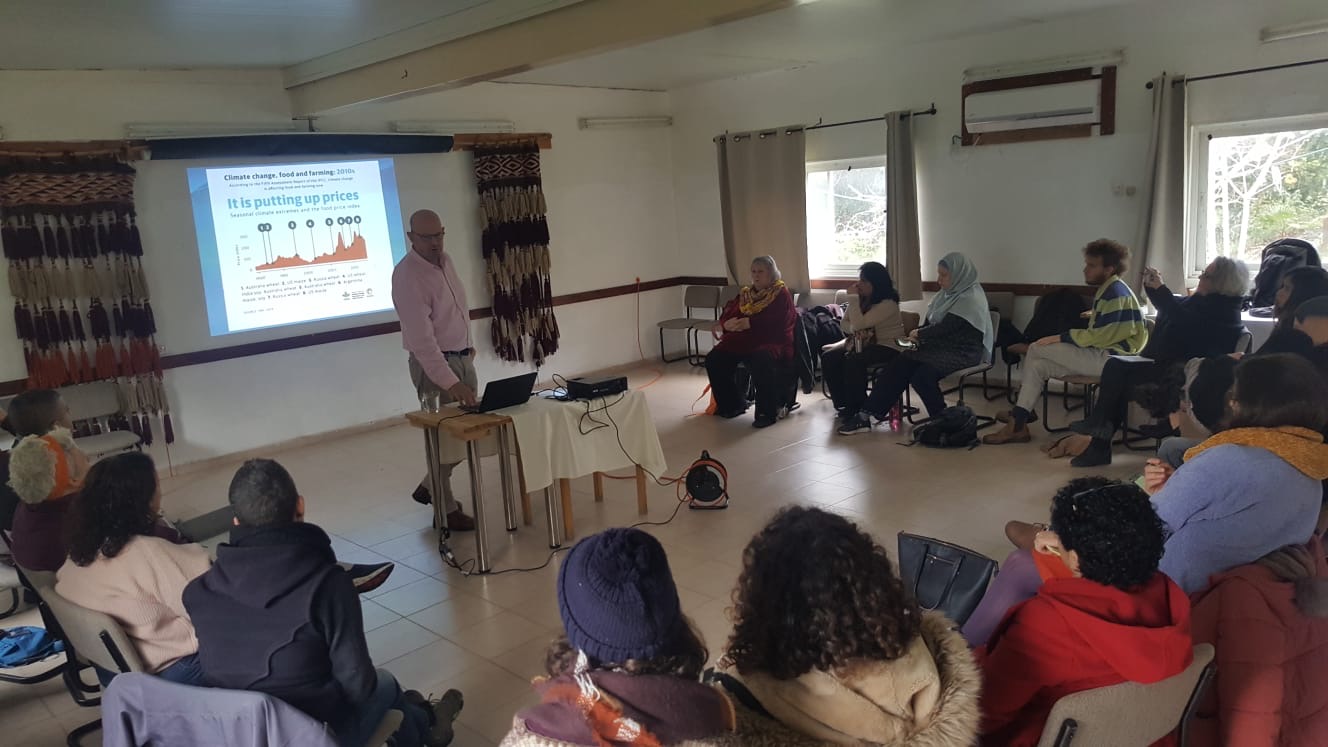
The second session of the 2019-2020 School for Peace Change Agents Course for Jewish and Arab environmentalists promoting environmental justice was held in Wahat al-Salam – Neve Shalom. Participation in the course doubled from the first meeting in December, so that there are now 18 participants. Due to the additional persons joining the course, it was necessary to repeat the acquaintance session. They spoke about their decision to join the course, their desire to meet the other side, and to discuss issues relating to environmental justice.
After the 90 minute acquaintance session, Prof. Danny Rabinowitz gave us a fascinating lecture on environmental justice, its basic concepts, what is happening in the world, who is responsible for the situation, which population are hurt more by it, and more. His lecture awakened interest, raised important questions and opened new horizons for dialogue.
After the lecture and a hearty lunch, we met for a dialogue and summary session. The dialogue was tense, the topics of the lecture were pushed a little to the side, and the subject of the present language in the room took a fascinating place in the meeting of this newly forming group. Time plays an important role. The workshop ended with the knowledge that we must continue to discuss and find the right ways for the group to conduct the discourse, in the language or languages that will allow all participants to feel comfortable. The issue of the language spoken in the room is a familiar and frequent topic in the bi-national encounter. In what language should we speak? Should we use translation and, if so, how? Who is responsible for explaining or asking for an explanation? There are no shortcuts in this process. The group needs to find the right balance for itself, and therefore must allow time for discussion of the language issues, even if it is tense and difficult.
The next session of the course will be held on February 21-22. At this meeting we will meet for a continuation lecture by Prof. Danny Rabinowitz on the topic of nationalism and the environment (the relationship between national movements and environmental crises). And we will allow more time for dialogue.
Story:
Noa Barkai
Acquaintance session