
Politicians Building Partnership: New Program
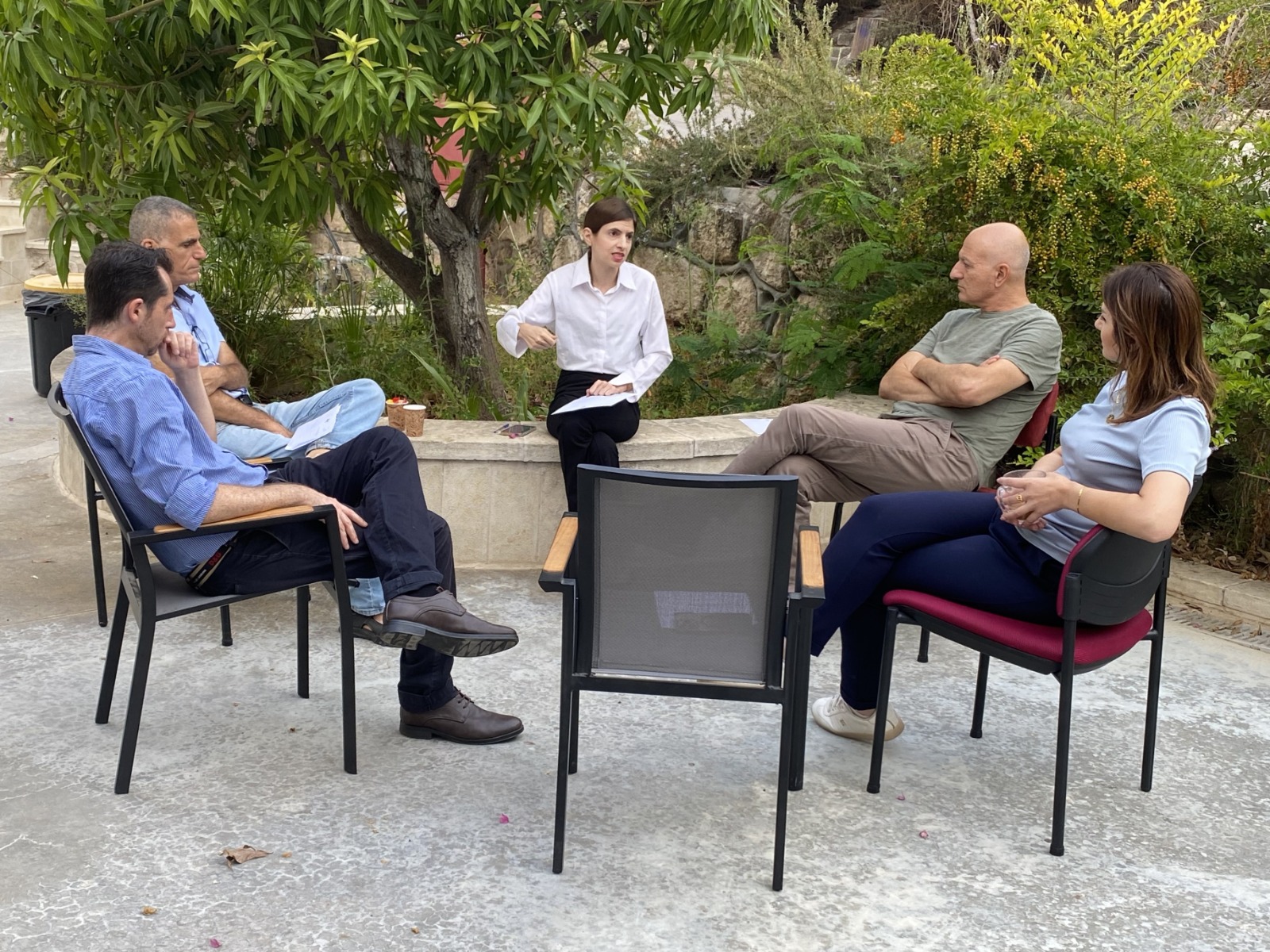
Summary of the First Cohort of “Politicians Building Partnership”
September–November 2025
Introduction
The initiative for the program emerged in response to a politically unsettling moment – the attempt to remove MK Ayman Odeh from the Knesset, and the public discourse that exposed how Palestinians are largely perceived as a threat rather than partners. Feeling a sense of urgency, and recognizing that democracy cannot be rebuilt without Jewish–Palestinian cooperation, Nava Sonnenschein proposed creating a dedicated program for politicians. The goal was to form avenues of collaboration between Arab parties and Jewish opposition parties.
Building on the School for Peace’s longstanding experience training change agents from various fields – such as lawyers, urban planners, mental health professionals, and artists – this time the focus was deliberately on political leadership, in light of a reality shaped by war, polarization, and rising hatred and distrust. After a challenging month-long recruitment process, the program opened with 23 participants from six different parties.
Throughout the program, an active WhatsApp group was formed, serving as a space for sharing materials, emotions, and lively discussions that continued beyond the meetings themselves.
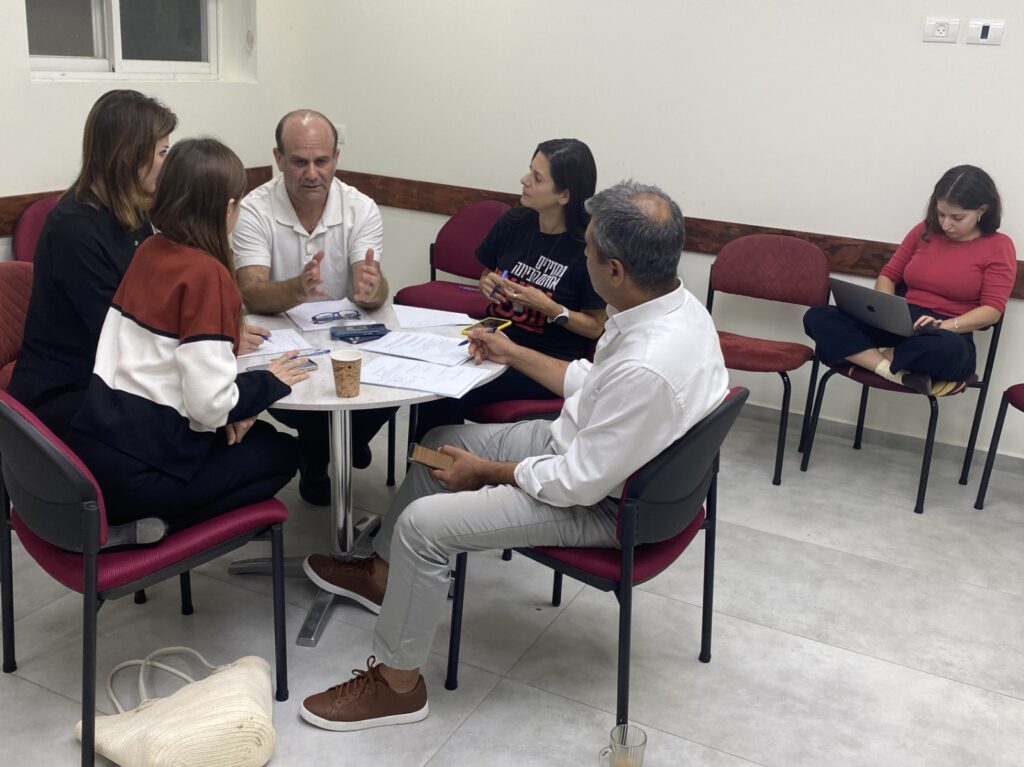
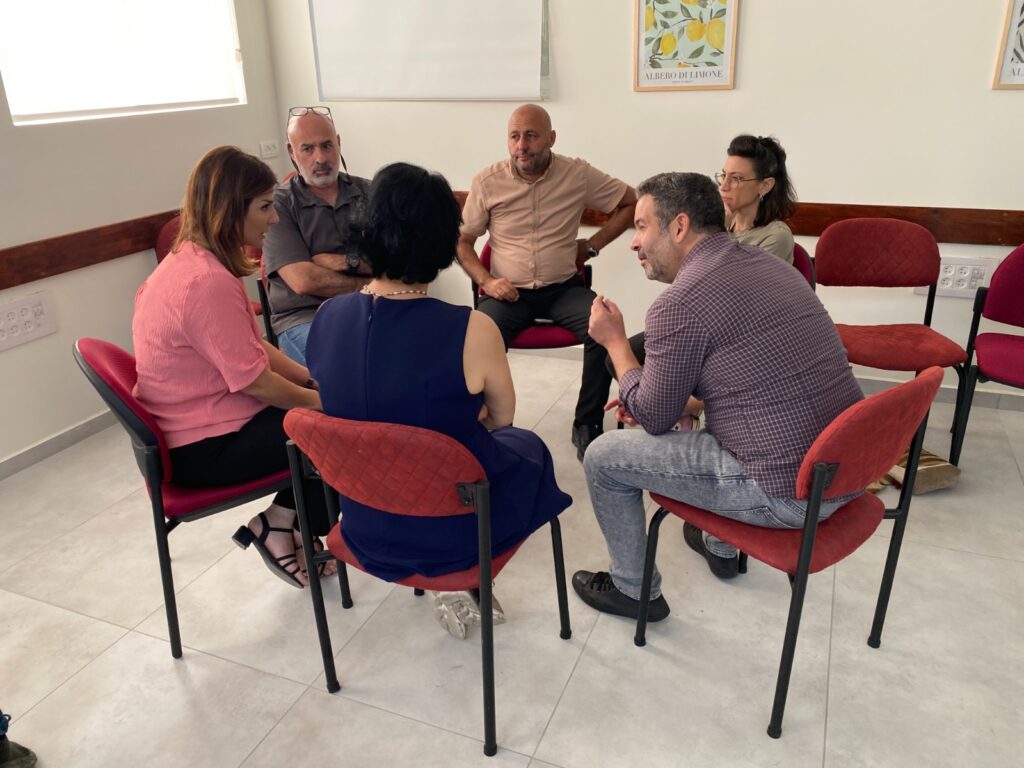
First Meeting – 2 September: Emotions, Trauma, and Returning to Political Action
Participants shared the heavy feelings they carried with them from the war and public discourse. Palestinian participants spoke about fear of speaking out, deep despair, and a sense of helplessness that distanced them from politics – yet also about a renewed decision to return to political engagement out of public responsibility.
Selected quotes from the meeting:
“I felt there was no point in politics – but I realized that giving up is a privilege I cannot afford.” A Palestinian participant.
“We cannot allow ourselves despair. My people are fighting for survival.” A Palestinian participant.
“If within this terrible reality we can still speak – after the war we must build something together.” A Jewish participant.
“You cannot fight for democracy while ignoring the occupation – it will explode again and again.” A Jewish participant:
The meeting brought up fear, shame, and confusion – alongside a sincere desire to create a shared political horizon.
During the month, two uni-national meetings also took place:
- On the Palestinian side, participants expressed clear support for bringing down the current government and for supporting a future opposition government – while disagreeing on how such support should be structured. There was also a significant discussion on the representation of women and youth.
- On the Jewish side, the discussion centered on trauma following October 7, on feelings of responsibility, and on moral dilemmas regarding IDF actions in Gaza. Participants grappled with questions of refusal, belonging, morality, and national identity.
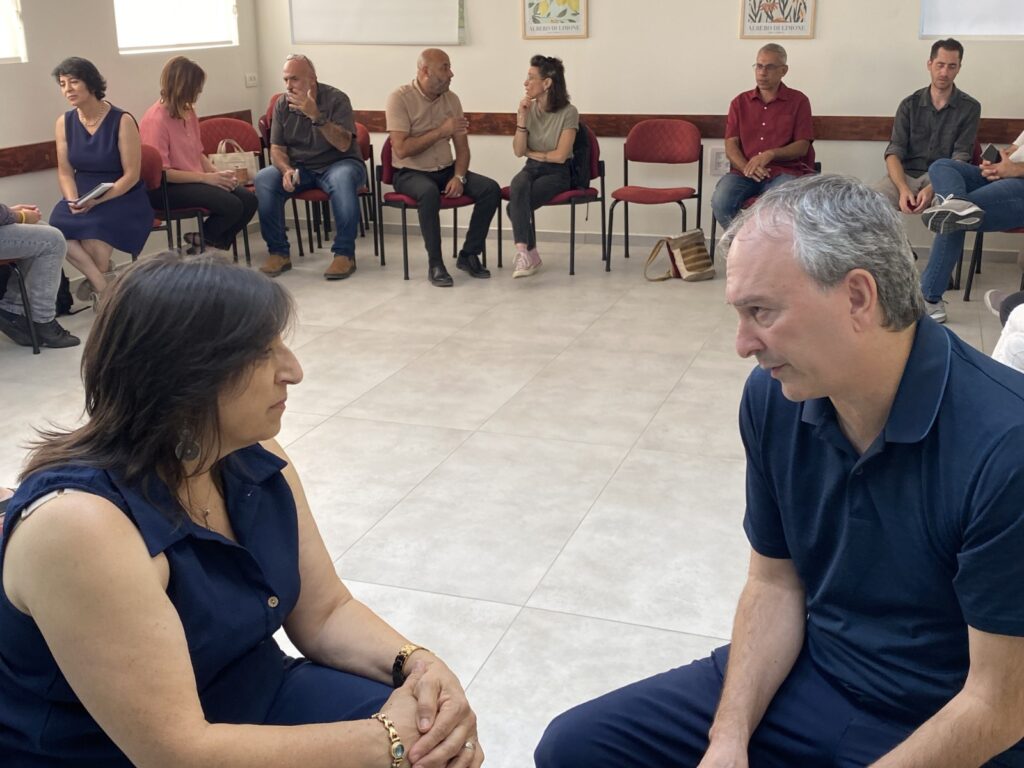
Second Meeting – 16 September: Core Principles and the Challenges of the Current Moment
Participants split into groups that worked on three topics:
- The impact of the war on partnership
Participants described intensifying polarization, especially among youth, deepening mistrust and harming even basic communication. Several described a “mix of guilt, shame, and fear” that makes it difficult to build shared space. The war was said to destabilize identities and raise difficult questions – for example, whether rethinking military conscription is necessary to build partnership. Participants criticized the opposition for avoiding the conflict during elections, questioning whether this helps or weakens shared civic discourse. - Principles that cannot be compromised
The group tried to articulate what “the line we hold” is, even amid fear and uncertainty. Principles raised included the right to self-determination for both peoples, belonging, equality, and justice. One participant noted, “It may sound like slogans, but we must begin with honest conversation about collective rights and language.” There was discussion of a vision for a state with a more civic character, freedom of religion and from religion, and unconditional human rights – including LGBTQ rights. - Challenges in light of the strengthening right wing
Participants described a discourse shrinking into zero-sum framing, with no middle ground, and government efforts to enforce Jewish uniformity and take over power centers. Concerns were raised about value erasure: the disappearance of the words “peace” and “democracy” from public discourse, and the difficulty Israeli society has in accepting the idea of equality. Participants emphasized that recovery will take years: “The rot is deeper than the people currently running the system.” Additional challenges included the absence of alternative leadership and a media landscape that restricts complex discussions.
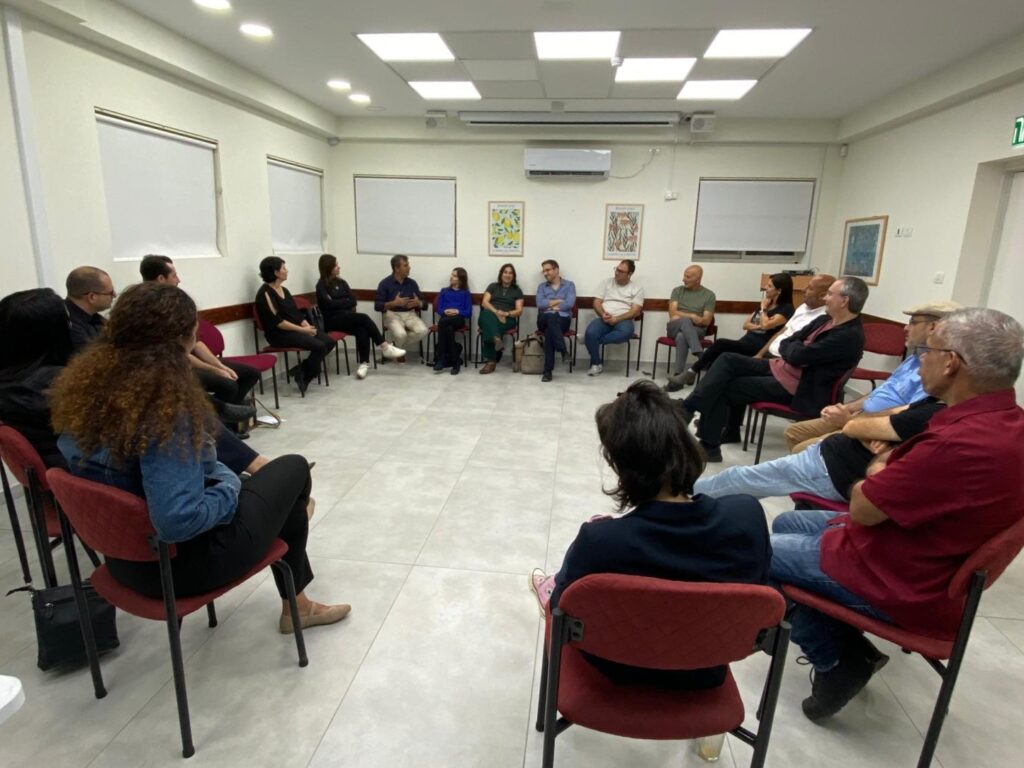
Third Meeting – Negotiation Simulation
In this meeting, participants conducted negotiations on three topics:
- The character of the state
- Foreign policy
- Combating crime in Palestinian society
Significant gaps emerged regarding the character of the state:
- The Jewish side sought to preserve the definition of Israel as a “Jewish and democratic” state.
- The Palestinian side emphasized full equality – calling for an in-depth discussion of its practical implications.
In the uni-national meetings, participants also continued exploring questions of representation, forming a future joint list, and building trust around the possibility of Jewish-Palestinian coalition frameworks.
Fourth Meeting – 28 October: Full Equality and Channels of Dialogue
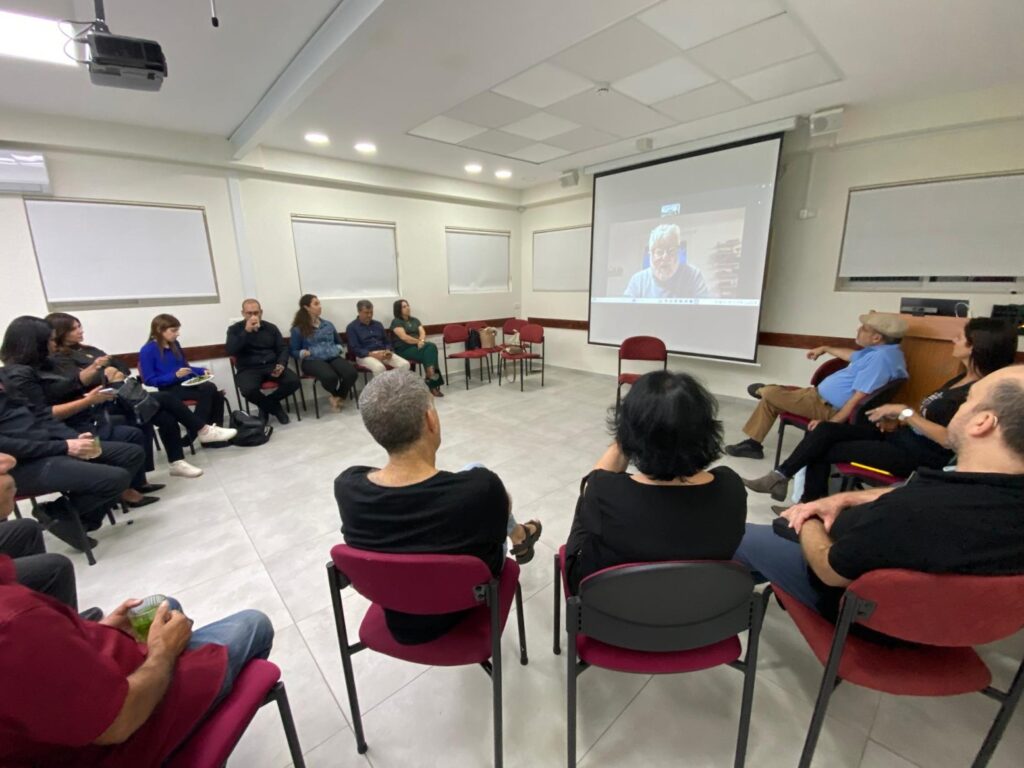
The final meeting included an in-depth discussion of the meaning of full equality within a shared political sphere. The group then held a Zoom conversation with Dr. Gershon Baskin, who spoke about the confidential negotiation channels he conducted with Hamas. The central message that emerged was that dialogue – even with an enemy – is preferable to disconnection.
Overall Summary
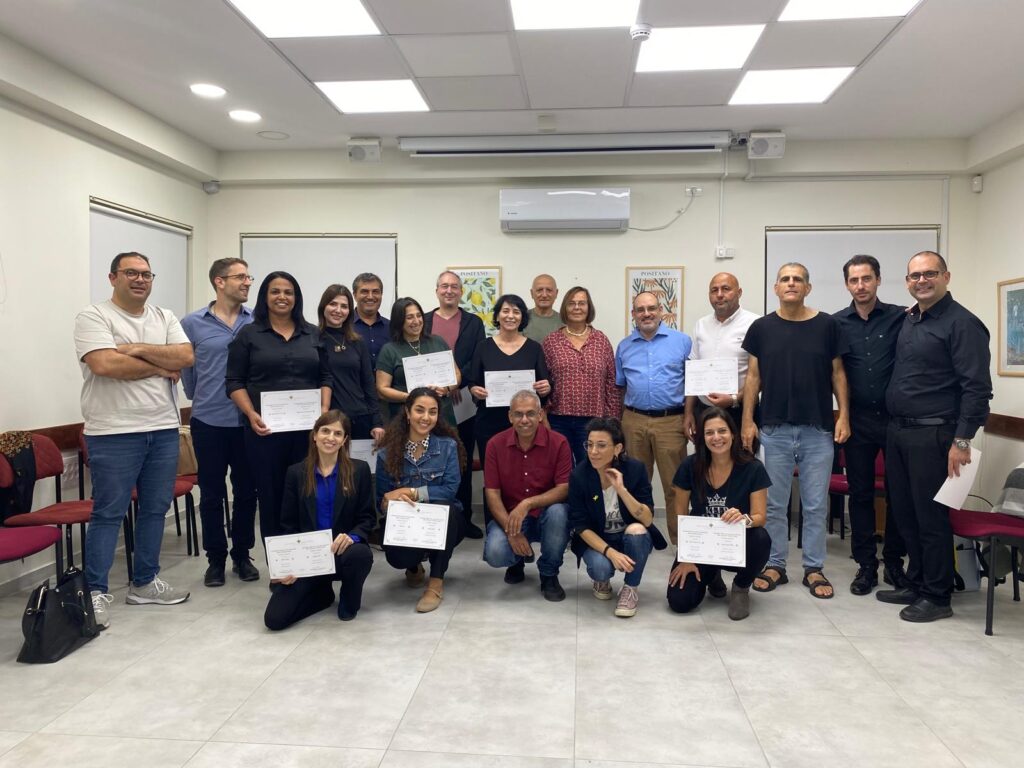
At the closing session, participants shared their reflections. Four central messages stood out:
- Even in the most difficult moments – we must maintain channels of communication and continue seeking ways to connect.
- Political courage isn’t going to war – it’s building a new order.
- The human encounter changed my perspective – maybe it’s time to meet the reality on the ground together, not only talk about it.
- Even if the impact is not immediate – the network built here is a foundation for future joint action.
In conclusion, we felt that despite disagreements, political tensions, and the harsh political and public climate, participants succeeded in creating an honest space where deep and candid conversation was possible. They discussed the boundaries of partnership, the need for political legitimacy for Arabs, and the importance of fundamentally transforming the public discourse. A sense of responsibility also emerged: recognizing Jewish-Arab partnership as essential for political change, and carrying these insights outward into public and community arenas – especially toward the upcoming elections.
Although it remains unclear where this process will lead, a new foundation of trust, commitment, and deep dialogue was laid here – a cautious yet meaningful basis for joint action in an exceptionally polarized and complex time.
__